
Common Challenges in Mixing Refractory Materials – and How Pan Mixers Solve Them
Refractory materials are essential for industries that operate under extreme heat, chemical exposure, and mechanical stress, including furnaces, kilns, and petrochemical plants. In Kuwait’s industrial sector, maintaining the quality and consistency of refractory castables is critical for operational efficiency, safety, and durability.
As an Indian manufacturer and exporter supplying high-performance pan mixers to Kuwait, we have extensive experience in helping industries overcome the challenges of refractory mixing. Our mixers are designed to enhance performance, reduce operational costs, and extend furnace lifespans.
Common Challenges in Mixing Refractory Materials
Industrial operators frequently face several issues when mixing refractory materials. Achieving uniformity in high-density mixtures is difficult, as segregation of powders and aggregates can create weak spots in furnace linings.
Workability is another challenge. Incorrect water-to-material ratios can make shaping and placing the castable difficult, leading to delays and inconsistent results.
Air entrainment during mixing can form voids, compromising thermal and mechanical properties. Handling abrasive and chemically active materials can quickly wear out standard mixers.
Maintaining batch-to-batch consistency is also challenging, as variations in mixing can result in inconsistent performance across batches. These challenges are common across cement, steel, petrochemical, and energy sectors, where furnace reliability is critical.
| Challenge | Impact on Refractory Materials |
|---|---|
| Uniformity | Segregation of powders and aggregates creates weak spots, reducing durability. |
| Workability | Incorrect water-to-material ratio can make shaping and placing difficult. |
| Air Entrapment | Air pockets form voids, compromising thermal and mechanical properties. |
| Abrasive & Corrosive Handling | Standard mixers wear quickly when handling refractory components. |
| Batch-to-Batch Consistency | Variations in mixing result in inconsistent performance across batches. |
How Pan Mixers Solve Refractory Mixing Challenges
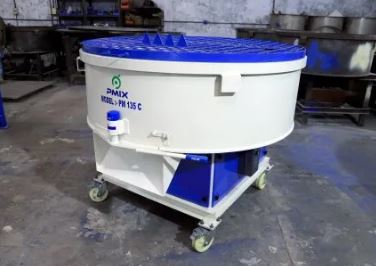
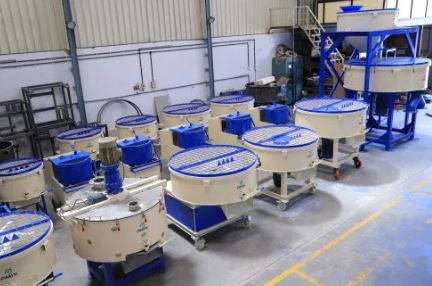
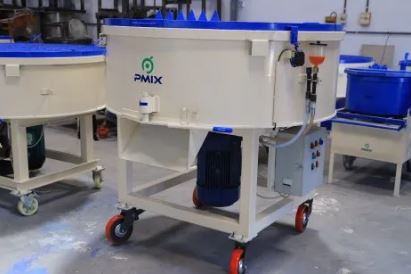
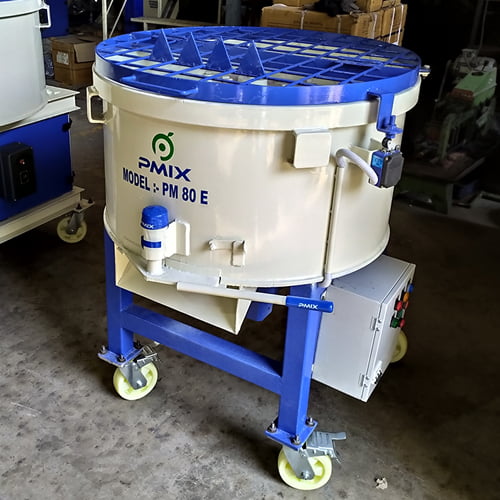
Pan mixers are designed to handle dense, viscous, and abrasive refractory materials. They feature a stationary horizontal pan and rotating blades, which provide thorough and uniform mixing that is difficult to achieve with conventional mixers.
These mixers address each common challenge effectively. The blades lift and fold materials to produce homogeneous mixes with no weak spots. Adjustable mixing time and intensity ensures ideal consistency, making shaping, placing, and compacting easier. Controlled blade motion minimizes air inclusion, producing dense castables. Heavy-duty construction resists wear and corrosion from harsh materials. Adjustable settings ensure uniform quality for every batch, guaranteeing reliable mechanical and thermal performance.
| Challenge | How Pan Mixers Solve It |
|---|---|
| Uniformity | Blades lift and fold materials to produce homogeneous mixes with no weak spots. |
| Workability | Adjustable mixing time and intensity ensures ideal consistency. |
| Air Entrapment | Controlled blade motion minimizes air inclusion, producing dense castables. |
| Abrasive & Corrosive Handling | Heavy-duty construction resists wear and corrosion from harsh materials. |
| Batch-to-Batch Consistency | Adjustable settings ensure uniform quality for every batch. |
Advantages of Using Pan Mixers
Pan mixers offer several advantages for industrial applications. Homogeneous mixing eliminates weak spots and improves thermal and mechanical performance. Controlled workability makes shaping, placing, and compacting castables much easier.
High durability allows pan mixers to handle dense, abrasive, and chemically active refractory materials without frequent maintenance or downtime. Consistent output ensures every batch meets strict quality standards. Efficient production makes them suitable for small-to-medium batches, which is ideal for specialized or critical applications.
| Feature | Benefit for Industrial Applications |
|---|---|
| Homogeneous Mixing | Eliminates weak spots, improves thermal and mechanical performance. |
| Controlled Workability | Easier shaping, placing, and compacting of castables. |
| High Durability | Handles dense, abrasive, and chemically active refractory materials. |
| Consistent Output | Ensures every batch meets strict quality standards. |
| Efficient Production | Suitable for small-to-medium batches for specialized or critical applications. |
Applications of Pan Mixers in Kuwait
Pan mixers are widely used in Kuwait’s industrial sector. In petrochemical plants, they produce furnace and kiln linings that can withstand extreme heat and chemical exposure.
In cement and steel production, pan mixers help produce durable refractory castables for high-temperature operations. They are also ideal for specialty castables, including decorative, insulating, or chemically resistant mixes.
During maintenance and repair, pan mixers allow rapid preparation of high-quality castables for industrial shutdowns, ensuring minimal downtime. Using pan mixers ensures high-quality, uniform refractory mixes that improve furnace performance and extend maintenance cycles.
| Industry | Application of Pan Mixers |
|---|---|
| Petrochemical Plants | Furnace and kiln linings that withstand extreme heat and chemical exposure. |
| Cement & Steel Production | Durable refractory castables for high-temperature operations. |
| Specialty Castables | Decorative, insulating, or chemically resistant refractory mixes. |
| Maintenance & Repair | Rapid preparation of high-quality castables for industrial shutdowns. |
Why Choose Our Pan Mixers
Our pan mixers are engineered to meet the demanding standards of Kuwait’s industrial sector. Heavy-duty construction allows handling of abrasive and dense refractory materials with minimal wear.
Adjustable mixing control provides precise settings for time and intensity. Easy maintenance ensures long operational life and quick cleaning. Consistent batch quality guarantees that every batch meets thermal and mechanical specifications. Export-ready design ensures reliable performance for industrial operators across Kuwait and the Gulf region.
| Feature | Advantage |
|---|---|
| Heavy-Duty Construction | Handles abrasive and dense refractory materials with minimal wear. |
| Adjustable Mixing Control | Precise control of mixing time and intensity. |
| Easy Maintenance | Quick cleaning and long operational life. |
| Consistent Batch Quality | Every batch meets required thermal and mechanical specifications. |
| Export-Ready Design | Reliable performance for industrial operators in Kuwait and the Gulf region. |
Investing in the right refractory mixing solution has a direct impact on industrial productivity and operational costs. Pan mixers reduce material wastage caused by inconsistent mixing, lower labor costs through easier handling and placement, minimize furnace downtime due to improved lining durability, and enhance safety by producing structurally sound castables.
Conclusion
Mixing refractory materials presents unique challenges, including maintaining uniformity, workability, and batch-to-batch consistency while handling abrasive and high-density materials. Without proper mixing, furnace linings and castables are prone to failure, reduced efficiency, and higher maintenance costs. Pan mixers solve these challenges by providing homogeneous, workable, and consistent mixes.
As an Indian manufacturer and exporter supplying to Kuwait, we deliver pan mixers that help industrial operators achieve durable, reliable, and high-quality refractory materials. By choosing the right pan mixer, industrial operators in Kuwait can achieve consistent castables, reduced downtime, high operational efficiency, and superior thermal and mechanical performance. Investing in pan mixers is a strategic step toward operational excellence, safety, and long-term industrial success.
